Paris, France
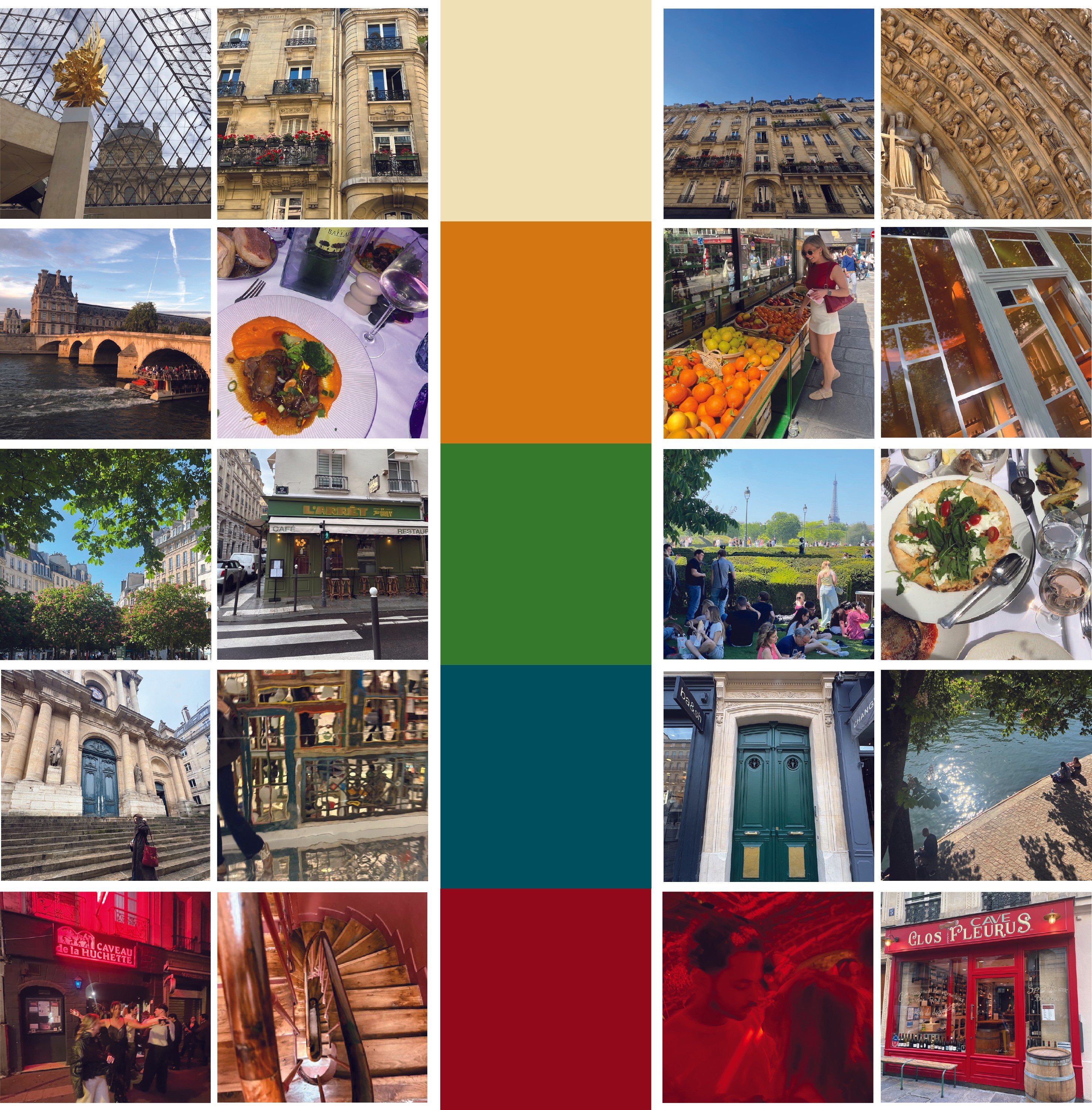
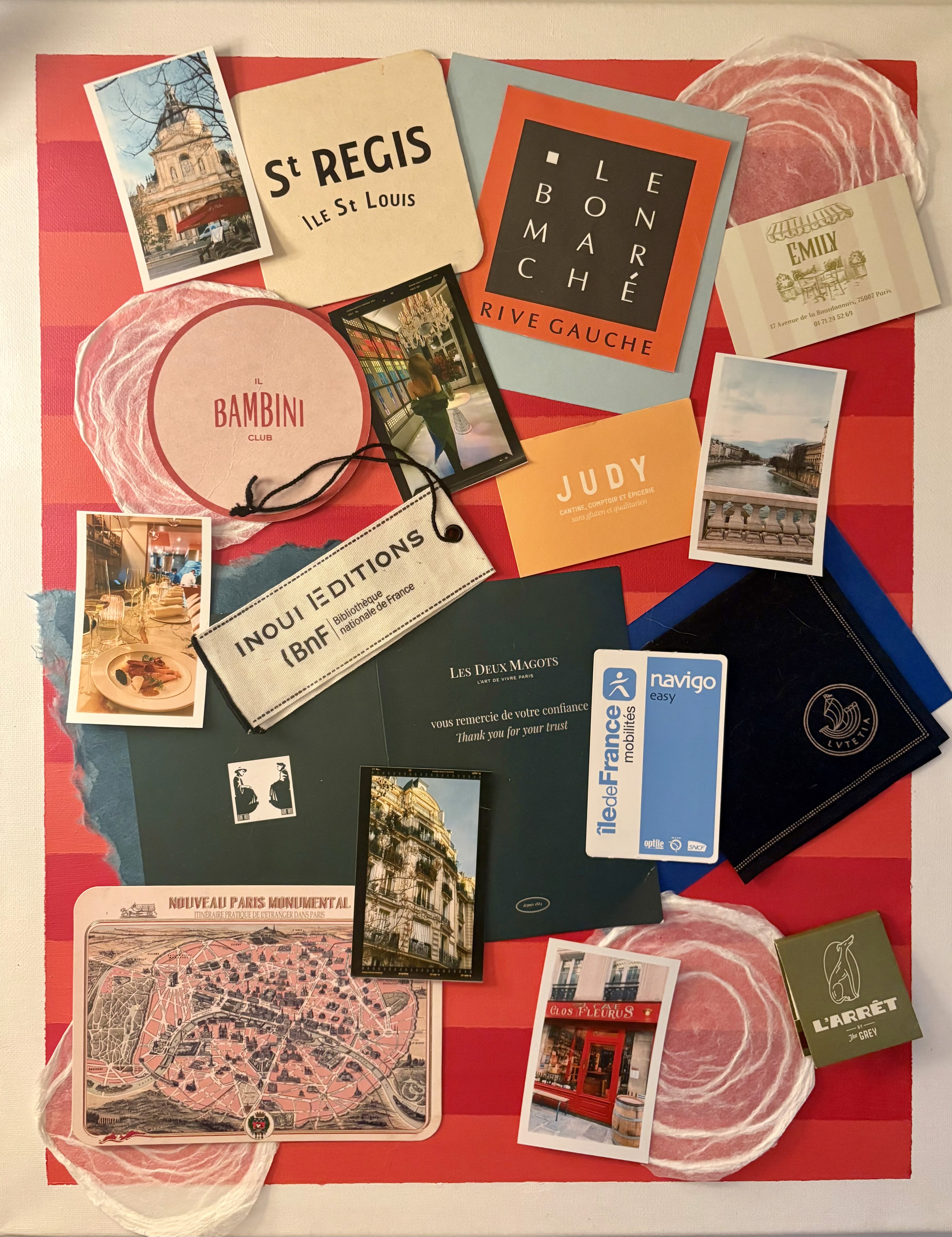
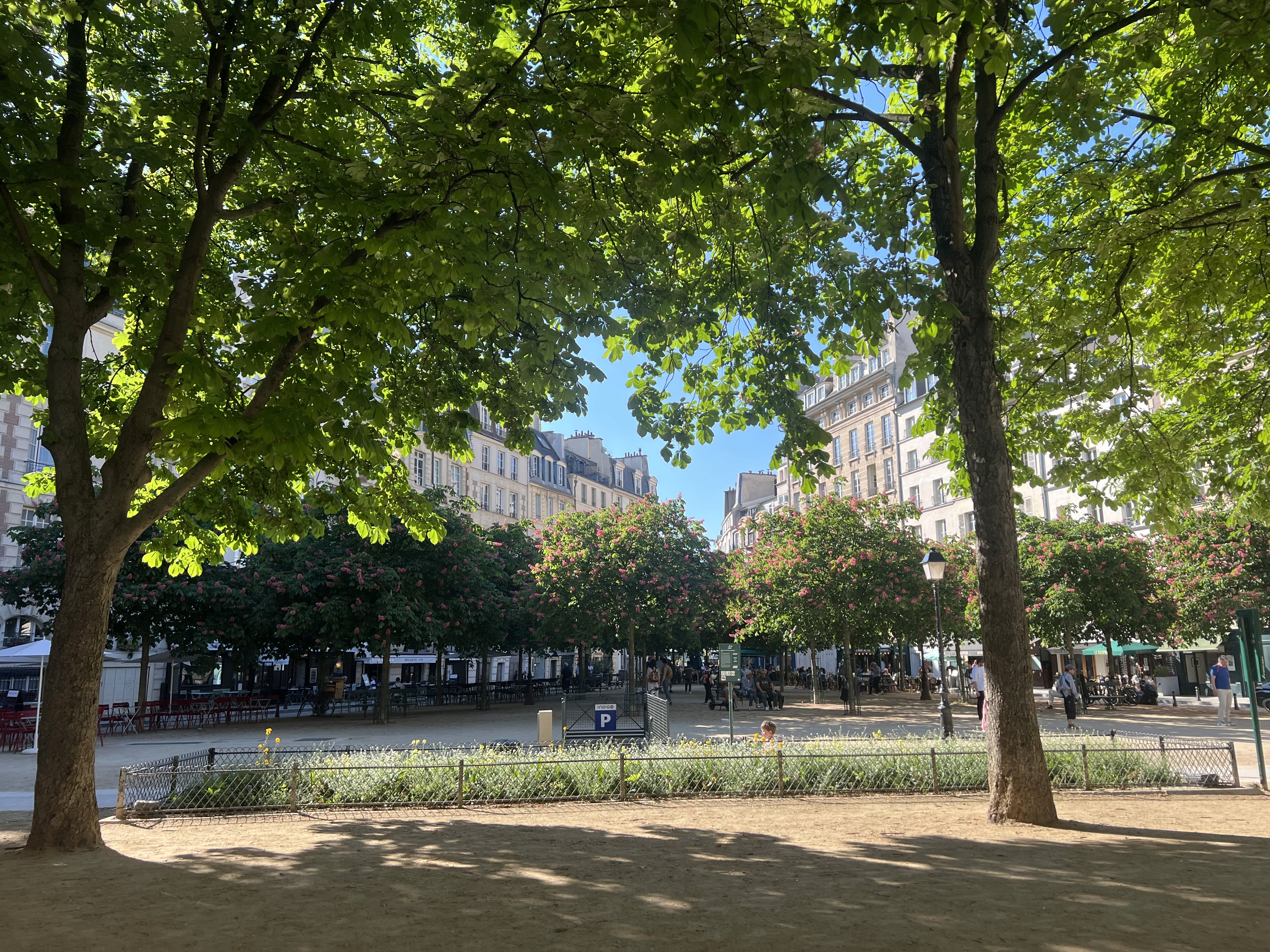
Flânerie : the French art of leisurely wandering, observing city life, and finding beauty in everyday details, a core part of Parisian culture.
Flânerie : the French art of leisurely wandering, observing city life, and finding beauty in everyday details, a core part of Parisian culture.
Les Parisian Portes
Les Parisian Portes
Posted June 12, 2026 by allison peterson
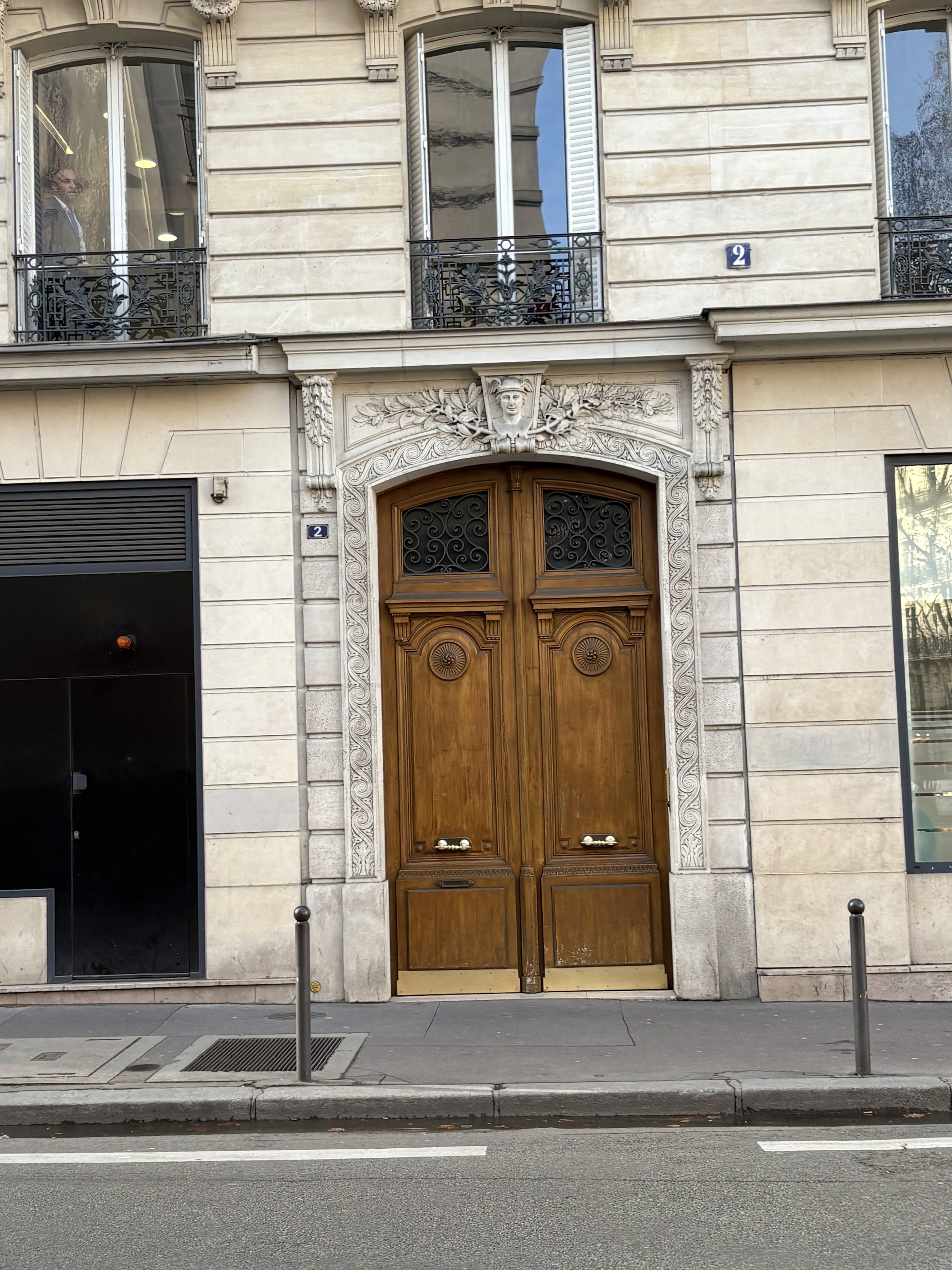
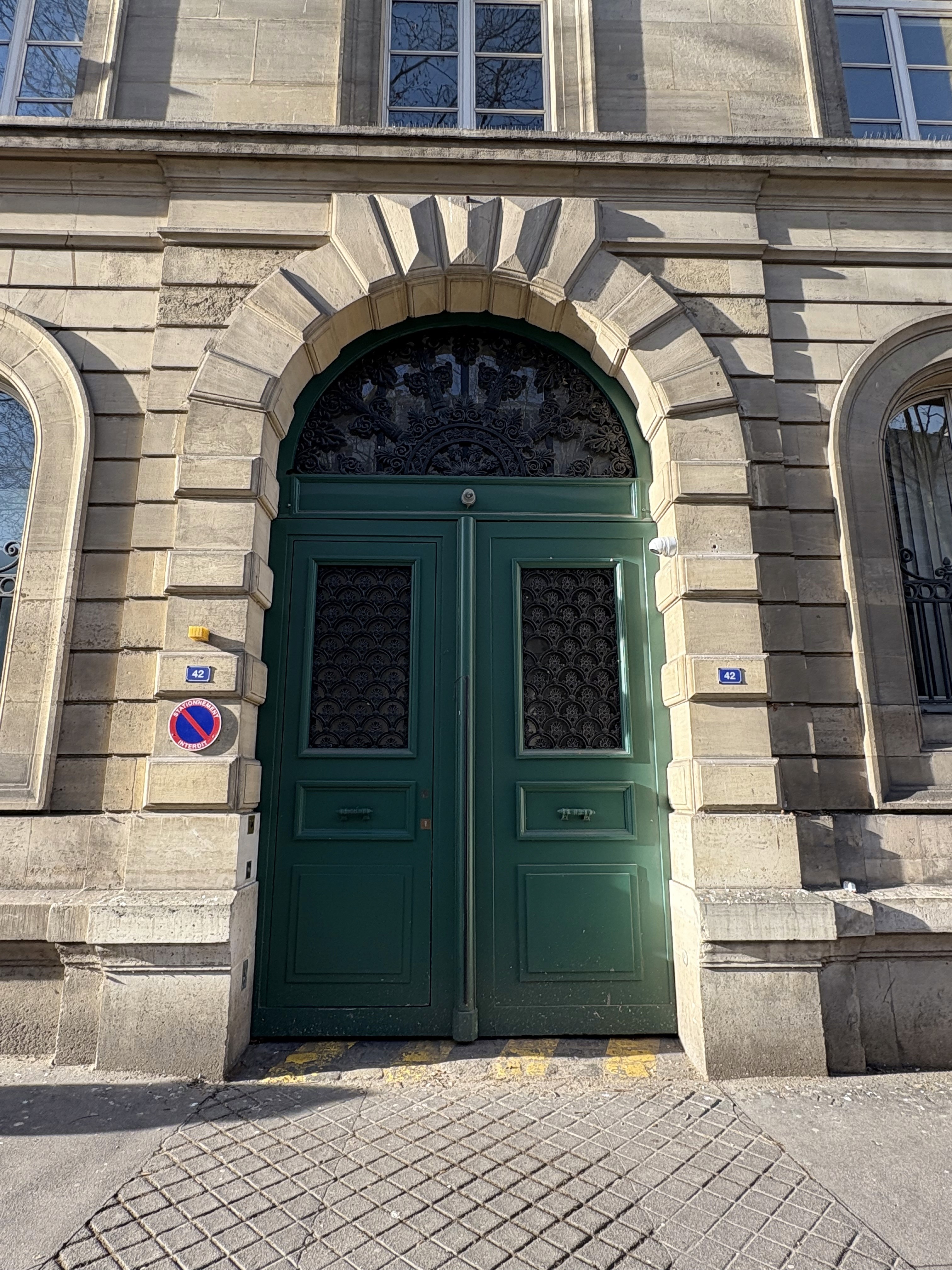
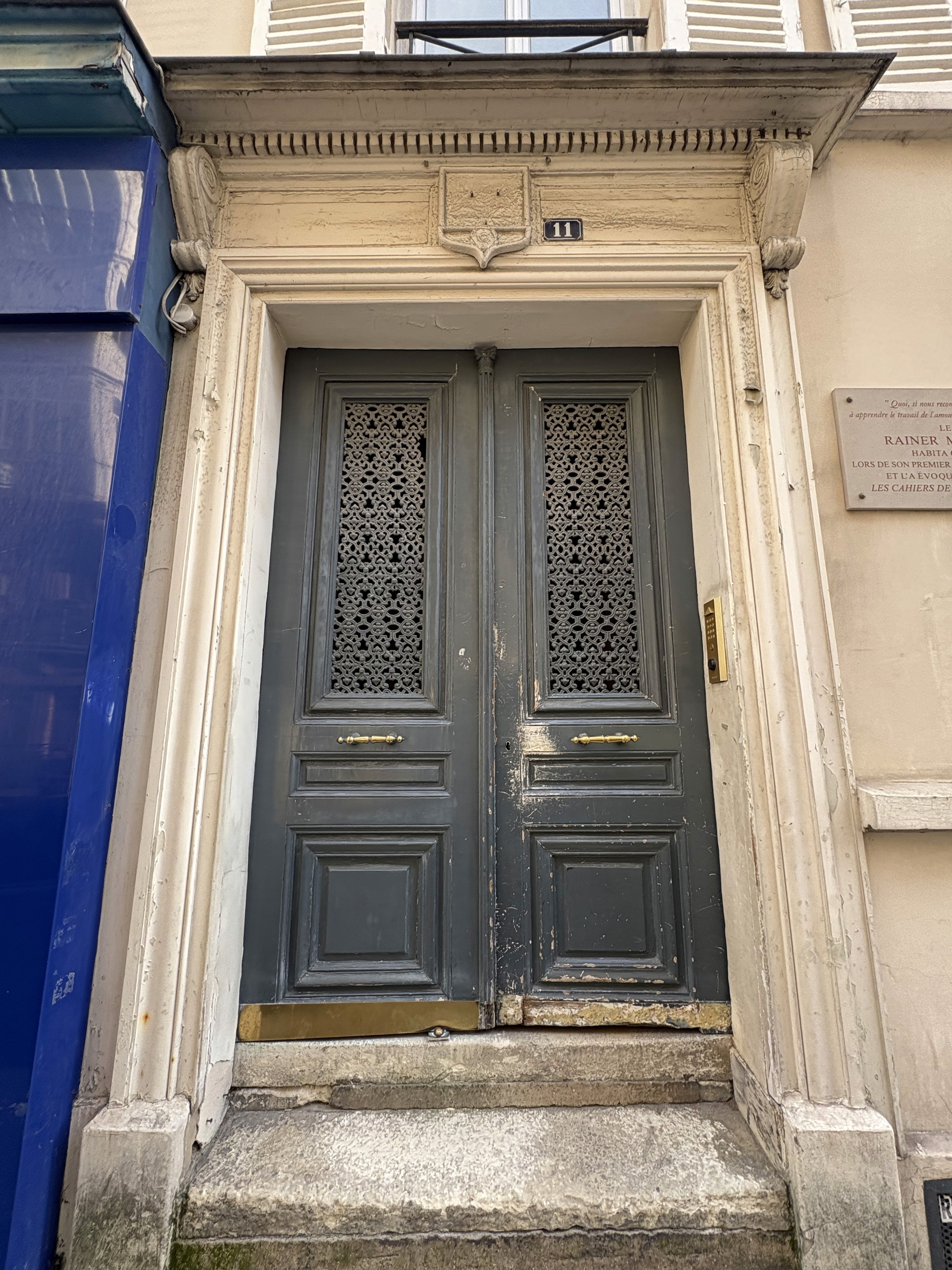
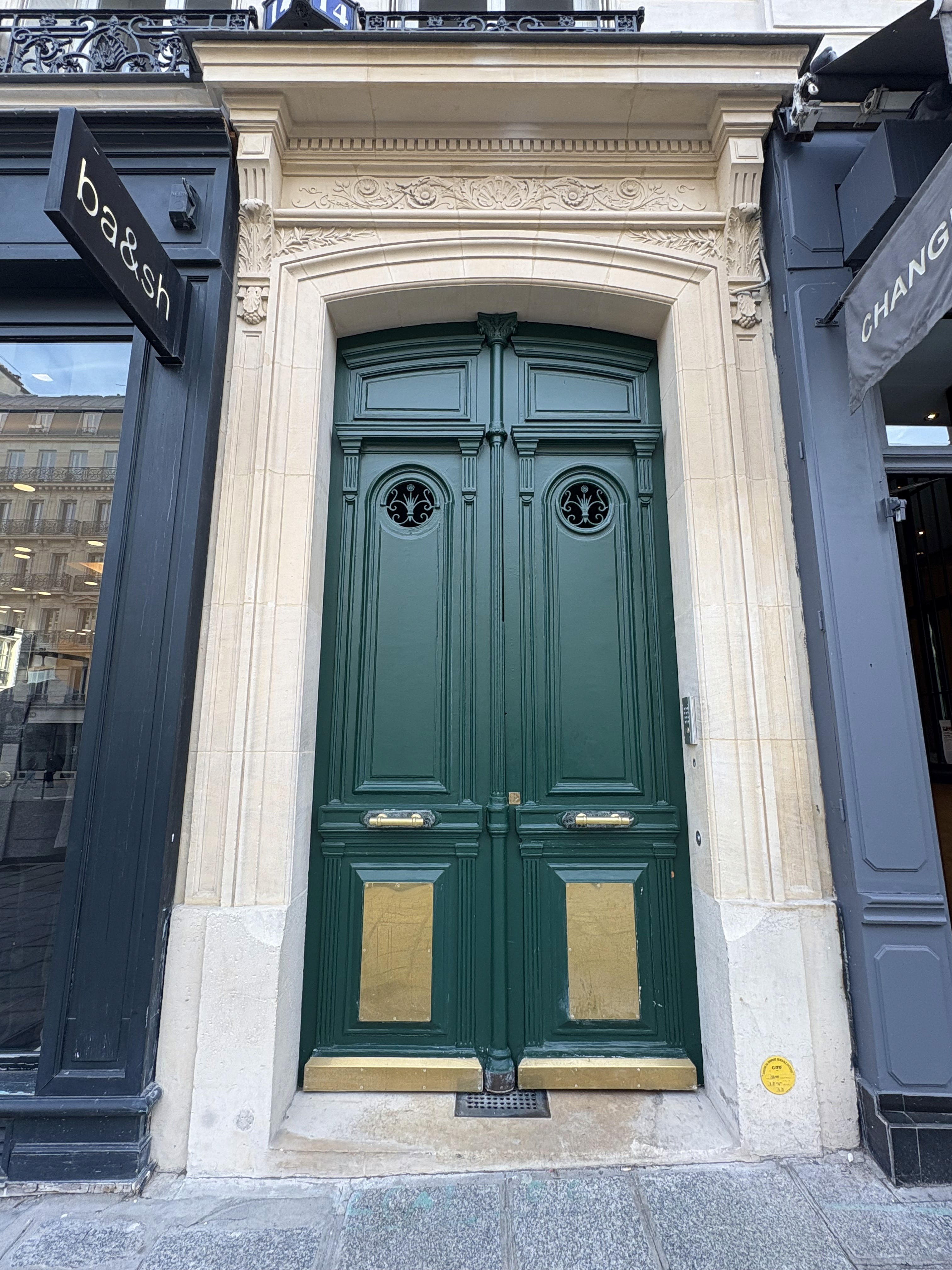
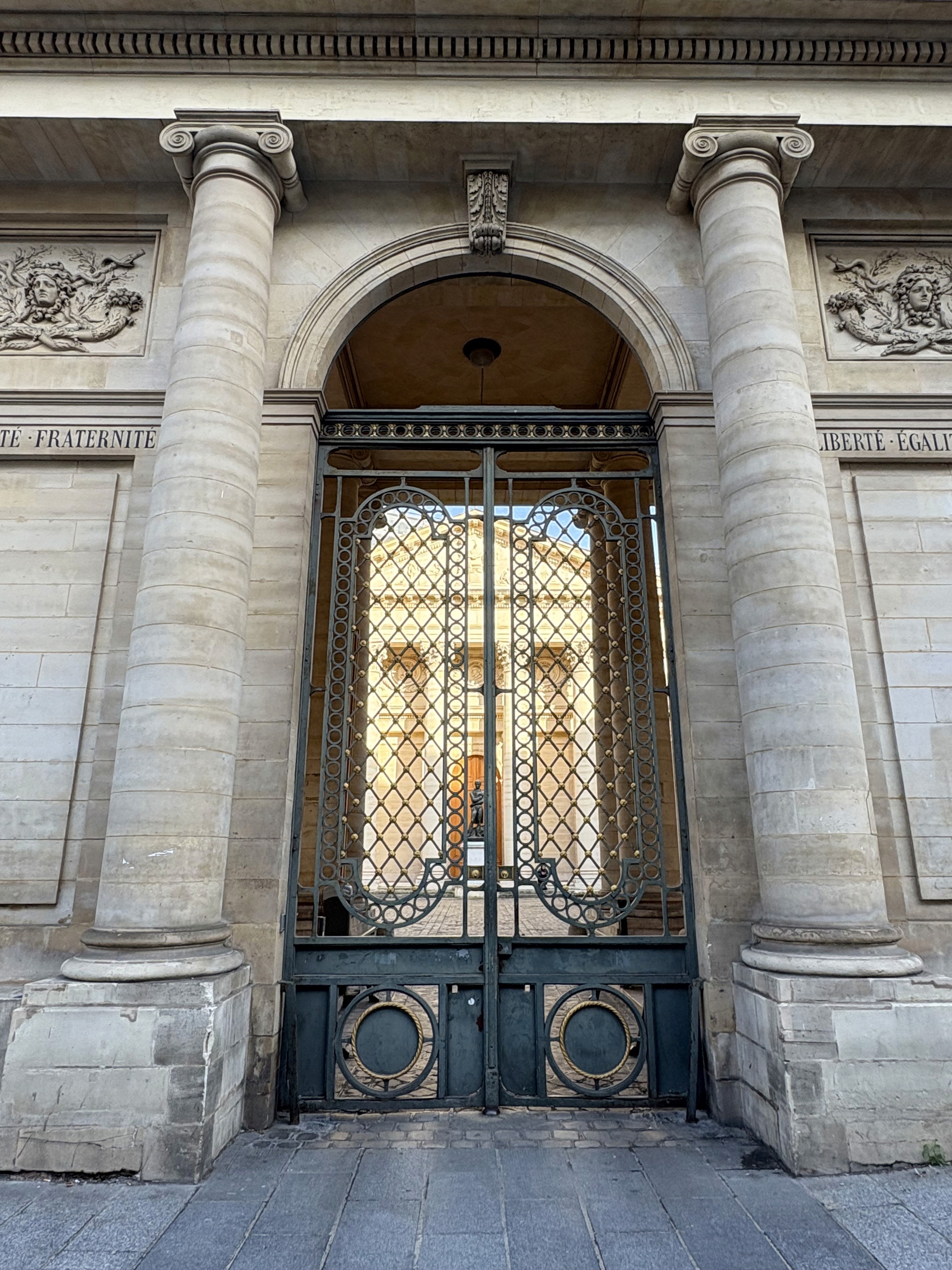
In Paris, beauty is rarely loud. It waits at street level, quietly woven into the delicate ornamentation of stone, iron, and timeworn wood.The city reveals this most delicately through its front doors. At first glance, they are merely entrances. Linger a moment longer, and they unfold into portraits of Parisian life. To understand this quiet dialogue between design and culture, one must look to the city’s rich history; which has shaped not only its architecture, but its soul.
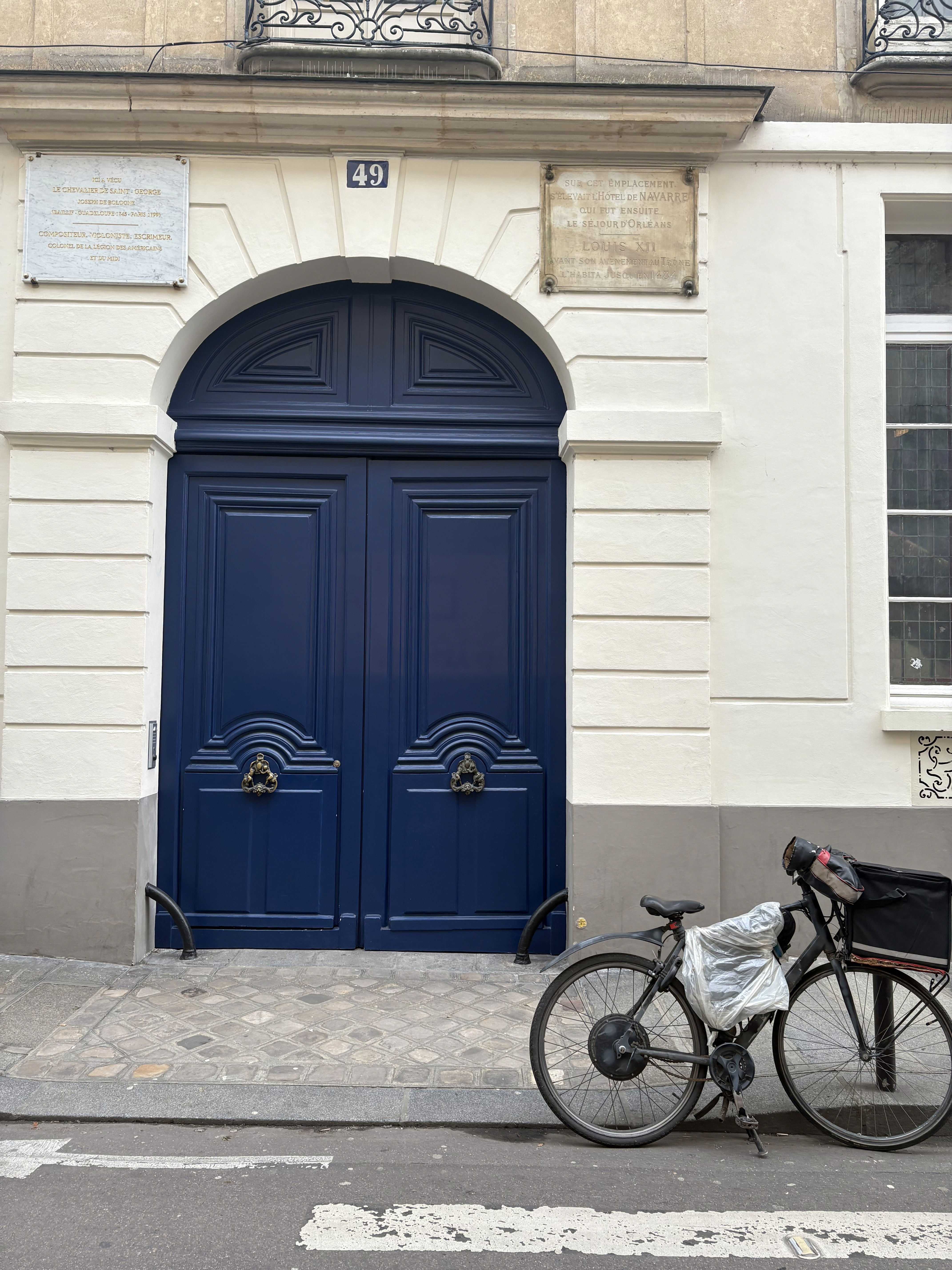
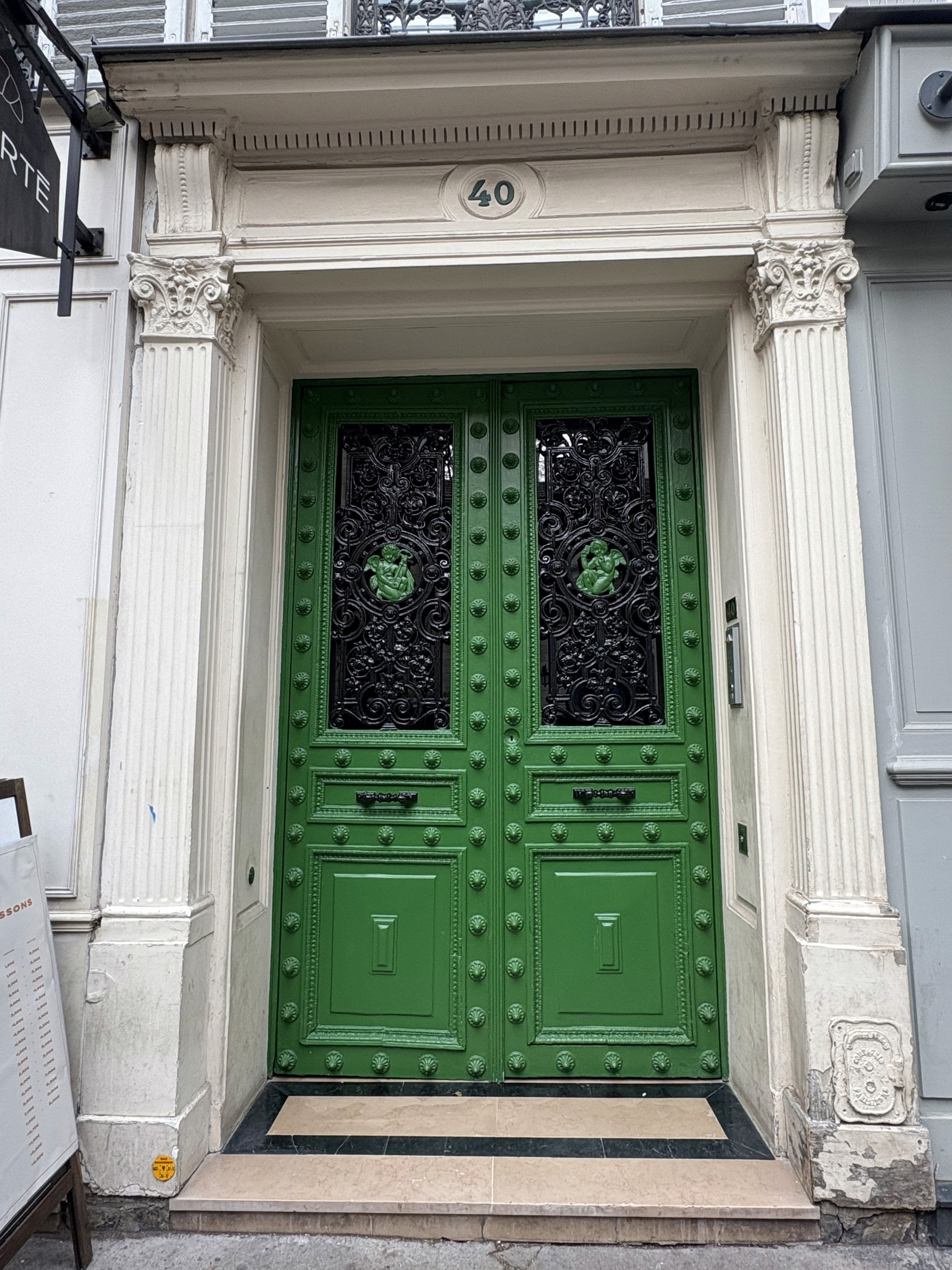
In the 19th century, Paris underwent a sweeping cityscape modernization to replace its prior medieval chaos with order and coherence. This renovation gave Paris its famous visual identity: cream limestone facades, aligned windows and repeating balconies which in turn promoted the architectural ideology of urban harmony. Within this strict order, the front door became one of the few places where personality could live. That is why so many Parisian doors are washed in deep greens, midnight blues, smoky grays, and warm browns; colors that once softly signaled the social standing of those who lived behind them. Against uniform stone, color becomes identity. The facade belongs to the city while the door belongs to the people. Parisian culture often works this way: controlled on the surface, expressive in detail.
The intention of these thoughtfully designed specifics of life can in tandem be observed by the French philosophy; that arrival has long been understood as an experience, not merely a function. A doorway is never just an opening in a wall; it is a moment of transformation, where one’s relationship to a building and to society tacitly changes. French architecture has always treated the entrance as a ritual space. The expression of these doors were built not for palaces, but for multi residential buildings. Historically, these doors opened into inner courtyards, not private corridors. Ordinary residents passed through them every day. This is one of the quiet foundations of Parisian aesthetics: beauty belongs to the street, not the elite. A functional object must still be graceful. A building must still contribute to Parisian expectations while reflecting the character of its residents.
Though these thresholds were designed in spite of their typical functionality, the door’s layout in relation to the built environment is intended to slow you down, to create a moment between public street and private life. This reflects something deeply Parisian: the importance of transition. The café terrace between work and home. The aperitif between day and night. The doorway between noise and quiet. Paris is devoted to the in-between; where thresholds are designed not just to separate spaces; but to shape how the public feels, moves, and arrives through the city.
Similarly to the door’s magnetic appearance and intentional function mirroring Parisian lifestyle, their fabrication of egress follows suit. Most of these doors were not manufactured; they were composed. A carpenter shaped the panels. A stonemason carved the frame. An ironworker forged patterns in metal. Even the paint colors once came from minerals and plants. This meticulous legacy still shapes Parisian design culture today; preference for repair over replacement, patina over perfection, objects that age instead of expire. Parisian style is not about invention, but refinement. Design, in Paris, is civic. Its thresholds remind us that good design doesn’t shout, but invites; quietly, through their beautifully crafted front doors. Living like a Parisian starts with slowing down enough to notice them.
Posted June 12, 2026 by allison peterson
In Paris, beauty is rarely loud. It waits at street level, quietly woven into the delicate ornamentation of stone, iron, and timeworn wood.The city reveals this most delicately through its front doors. At first glance, they are merely entrances. Linger a moment longer, and they unfold into portraits of Parisian life. To understand this quiet dialogue between design and culture, one must look to the city’s rich history; which has shaped not only its architecture, but its soul.
In the 19th century, Paris underwent a sweeping cityscape modernization to replace its prior medieval chaos with order and coherence. This renovation gave Paris its famous visual identity: cream limestone facades, aligned windows and repeating balconies which in turn promoted the architectural ideology of urban harmony. Within this strict order, the front door became one of the few places where personality could live. That is why so many Parisian doors are washed in deep greens, midnight blues, smoky grays, and warm browns; colors that once softly signaled the social standing of those who lived behind them. Against uniform stone, color becomes identity. The facade belongs to the city while the door belongs to the people. Parisian culture often works this way: controlled on the surface, expressive in detail.
The intention of these thoughtfully designed specifics of life can in tandem be observed by the French philosophy; that arrival has long been understood as an experience, not merely a function. A doorway is never just an opening in a wall; it is a moment of transformation, where one’s relationship to a building and to society tacitly changes. French architecture has always treated the entrance as a ritual space. The expression of these doors were built not for palaces, but for multi residential buildings. Historically, these doors opened into inner courtyards, not private corridors. Ordinary residents passed through them every day. This is one of the quiet foundations of Parisian aesthetics: beauty belongs to the street, not the elite. A functional object must still be graceful. A building must still contribute to Parisian expectations while reflecting the character of its residents.
Though these thresholds were designed in spite of their typical functionality, the door’s layout in relation to the built environment is intended to slow you down, to create a moment between public street and private life. This reflects something deeply Parisian: the importance of transition. The café terrace between work and home. The aperitif between day and night. The doorway between noise and quiet. Paris is devoted to the in-between; where thresholds are designed not just to separate spaces; but to shape how the public feels, moves, and arrives through the city.
Similarly to the door’s magnetic appearance and intentional function mirroring Parisian lifestyle, their fabrication of egress follows suit. Most of these doors were not manufactured; they were composed. A carpenter shaped the panels. A stonemason carved the frame. An ironworker forged patterns in metal. Even the paint colors once came from minerals and plants. This meticulous legacy still shapes Parisian design culture today; preference for repair over replacement, patina over perfection, objects that age instead of expire. Parisian style is not about invention, but refinement. Design, in Paris, is civic. Its thresholds remind us that good design doesn’t shout, but invites; quietly, through their beautifully crafted front doors. Living like a Parisian starts with slowing down enough to notice them.
Posted June 12, 2026 by allison peterson
In Paris, beauty is rarely loud. It waits at street level, quietly woven into the delicate ornamentation of stone, iron, and timeworn wood.The city reveals this most delicately through its front doors. At first glance, they are merely entrances. Linger a moment longer, and they unfold into portraits of Parisian life. To understand this quiet dialogue between design and culture, one must look to the city’s rich history; which has shaped not only its architecture, but its soul.
In the 19th century, Paris underwent a sweeping cityscape modernization to replace its prior medieval chaos with order and coherence. This renovation gave Paris its famous visual identity: cream limestone facades, aligned windows and repeating balconies which in turn promoted the architectural ideology of urban harmony. Within this strict order, the front door became one of the few places where personality could live. That is why so many Parisian doors are washed in deep greens, midnight blues, smoky grays, and warm browns; colors that once softly signaled the social standing of those who lived behind them. Against uniform stone, color becomes identity. The facade belongs to the city while the door belongs to the people. Parisian culture often works this way: controlled on the surface, expressive in detail.
The intention of these thoughtfully designed specifics of life can in tandem be observed by the French philosophy; that arrival has long been understood as an experience, not merely a function. A doorway is never just an opening in a wall; it is a moment of transformation, where one’s relationship to a building and to society tacitly changes. French architecture has always treated the entrance as a ritual space. The expression of these doors were built not for palaces, but for multi residential buildings. Historically, these doors opened into inner courtyards, not private corridors. Ordinary residents passed through them every day. This is one of the quiet foundations of Parisian aesthetics: beauty belongs to the street, not the elite. A functional object must still be graceful. A building must still contribute to Parisian expectations while reflecting the character of its residents.
Though these thresholds were designed in spite of their typical functionality, the door’s layout in relation to the built environment is intended to slow you down, to create a moment between public street and private life. This reflects something deeply Parisian: the importance of transition. The café terrace between work and home. The aperitif between day and night. The doorway between noise and quiet. Paris is devoted to the in-between; where thresholds are designed not just to separate spaces; but to shape how the public feels, moves, and arrives through the city.
Similarly to the door’s magnetic appearance and intentional function mirroring Parisian lifestyle, their fabrication of egress follows suit. Most of these doors were not manufactured; they were composed. A carpenter shaped the panels. A stonemason carved the frame. An ironworker forged patterns in metal. Even the paint colors once came from minerals and plants. This meticulous legacy still shapes Parisian design culture today; preference for repair over replacement, patina over perfection, objects that age instead of expire. Parisian style is not about invention, but refinement. Design, in Paris, is civic. Its thresholds remind us that good design doesn’t shout, but invites; quietly, through their beautifully crafted front doors. Living like a Parisian starts with slowing down enough to notice them.